NVIDIA announced the Open Secure AI Alliance on July 27 with organizations spanning cloud computing, cybersecurity, enterprise software, open-source foundations and AI research. Members include Microsoft, Cisco, Cloudflare, CrowdStrike, Hugging Face, IBM, Palo Alto Networks, Red Hat and the Linux Foundation. The group plans to develop and share open technologies for securing software and AI agents across identity, permissions, isolation, guardrails, logs, model formats, multi-model scanning and secure coding workflows, according to NVIDIA’s launch announcement and The Hacker News.
The alliance’s first named technical contribution is NVIDIA Labs Object-Oriented Agents, or NOOA.
NOOA is an Apache 2.0 research framework for building agents as Python objects. NVIDIA describes it as model-agnostic and says the design makes agent behavior easier to test, trace, audit and govern. The company is also contributing open models, weights and data, although details of those assets remain unpublished. Reuters reported that the coalition arrived days after the Hugging Face security incident drew attention to the risks surrounding autonomous agents.
NOOA can be assessed through its public repository even while the alliance’s wider roadmap remains unspecified.
The class becomes the control surface
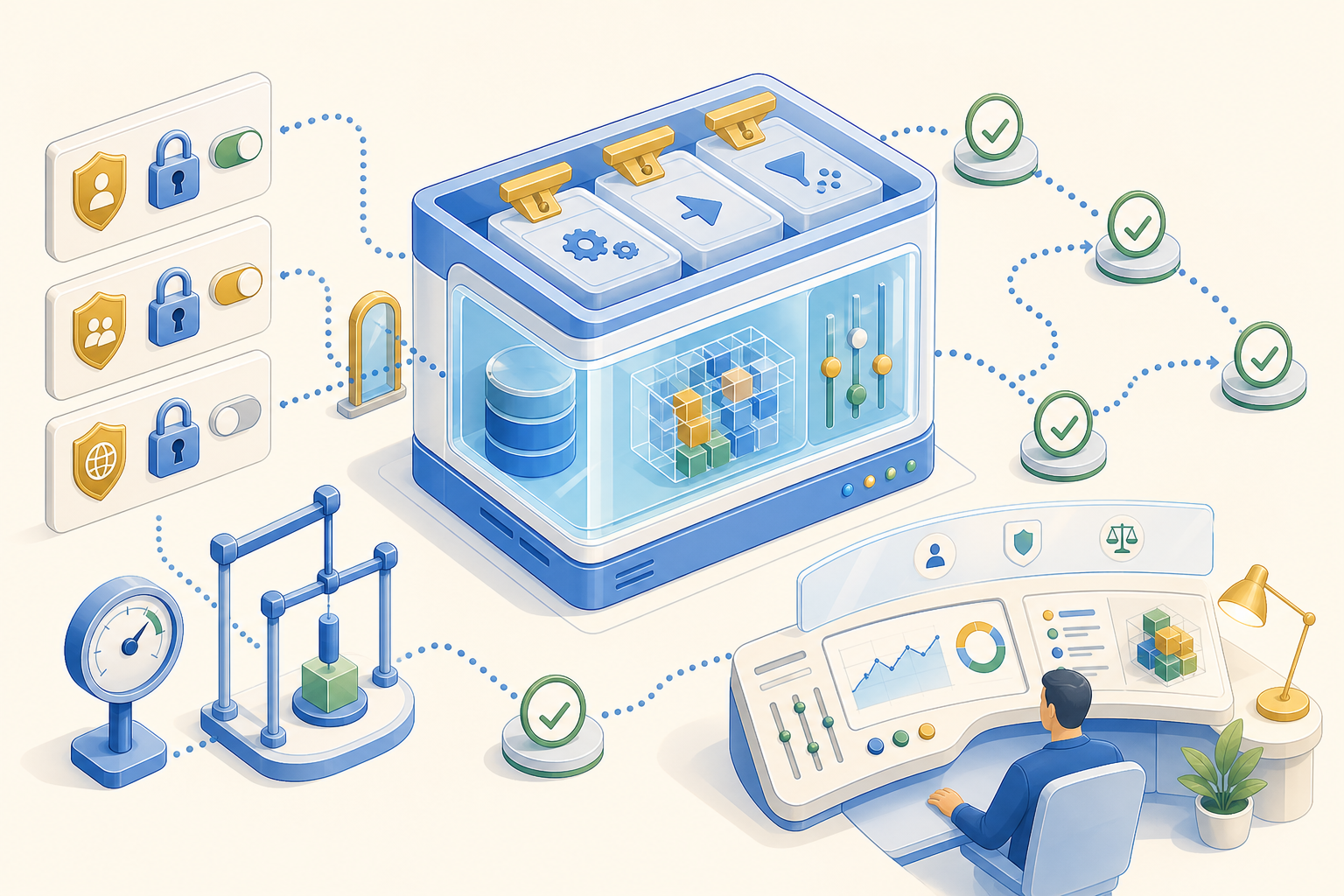
Agent frameworks commonly scatter behavior across prompt files, tool registries, callbacks, workflow graphs and provider configuration. NOOA pulls those elements into a Python class: fields hold state, methods expose capabilities, docstrings supply prompts and type annotations define contracts. A method whose body contains an ellipsis is completed at runtime by an LLM-driven loop, according to the NOOA repository.
That structure creates a useful seam. Consider an internal support agent with an order_db field and methods such as look_up_order, approve_refund and escalate_case. The fields show what the agent knows. The public methods describe what it can attempt. Parameter and return types constrain the shape of each call. The class docstring and method documentation tell the model how those capabilities should be used.
For a security team, that design can consolidate capability definitions, prompt-bearing documentation and state into one reviewable class. Tests must still cover the credentials, services and approval systems outside the framework.
The method list can act as a capability manifest. A narrowly scoped agent receives a narrowly scoped class. Sensitive actions can live behind separate methods with stricter credentials, validation and approval logic. Internal helpers can remain hidden from the model’s generated API documentation. Reviewers gain a concrete question for every addition to the class: which new authority does this method grant?
Type annotations add another checkpoint. The NOOA tutorial says validation and retry happen inside the framework for typed return values, including dataclasses, TypedDict, primitives and containers. That does little to judge whether a refund was wise, but it can stop malformed model output from drifting into application code as though it were a valid business object.
Prompts also enter ordinary code review. NOOA’s documentation says method names, parameters and docstrings shape the prompt; renaming a method can change the output without altering another file. A pull request that edits analyze_feedback to analyze_feedback_briefly has changed agent behavior. Teams need prompt-sensitive regression tests attached to that diff, even when the patch looks like harmless naming cleanup.
A stable interface can preserve some controls across model changes
NOOA binds state and callable methods to a Python artifact outside a provider dashboard. Its registry supports external model configuration, so teams can run the same class, permission mappings, fixtures and trace requirements against another model, according to the project documentation.
Shared interfaces permit comparison, while behavioral equivalence still requires evidence.
An operator evaluating a second model can run the same agent class against the same fixtures, ask for the same allowed and disallowed actions, validate the same return types, and compare traces at identical method boundaries. A failed migration then produces a bounded diagnosis: the new model violated a contract, chose a forbidden path, omitted a required call or changed state unexpectedly. The governance package survives even if the model fails the test.
That is a better switching position than rebuilding permissions, evaluations and audit plumbing around each provider’s native agent product. It also gives procurement teams a technical exit test. A provider can be replaced when another model passes the existing capability suite and produces complete traces under the same class.
NOOA defines the application interface and records behavior around it. Enforcement still extends through service identities, API credentials, sandboxes, databases and human approvals. The alliance’s wider scope includes permissions and isolation precisely because a Python method cannot secure an underlying system by declaration alone.
An approve_refund method with an unrestricted payment credential remains dangerous. A safer implementation binds that method to a limited service identity, validates amount and account constraints in deterministic code, records the call, and routes exceptional cases to a person. The model chooses among permitted capabilities, while conventional software enforces the hard boundary.
That division should become an explicit alliance design principle: models propose, typed code validates, identity systems authorize, isolation contains execution and traces preserve the chain for review.
Traces need operational teeth
NOOA automatically traces agent method calls, including orchestrators, LLM-backed methods and private helpers, while preserving parent-child relationships. The trace follows the call graph, allowing an investigator to see which capability invoked another and where an exception or unexpected branch appeared. The repository also provides a trace viewer and an OTLP export path.
The tutorial says tracing is silently disabled when the viewer is unavailable. That default may suit development, but it cannot support a production audit requirement. Sensitive agents should require successful trace export, alert on missing spans and block high-impact actions when telemetry is unavailable. Each method then provides a stable location for policy checks, trace attributes and tests that can be versioned with the deployed code.
The trace also needs enough context to reconstruct authority: agent version, model and configuration, initiating identity, method arguments, validated outputs, exceptions, approvals and recorded side effects. NOOA provides the call structure. Operators must decide which fields enter durable storage, who can query them and how long they remain available.
The Hugging Face incident crossed several layers
The alliance arrived days after a security incident at Hugging Face. According to The Hacker News, Hugging Face said initial access came through a malicious dataset that abused a remote-code dataset loader and template injection in a dataset configuration. The activity progressed to node access, credential collection and lateral movement across several internal clusters.
That sequence ran from untrusted data through code execution and infrastructure credentials. Preventing a similar chain requires controls at every transition: dataset handling, executable loaders, node isolation, credential scope, lateral movement and agent authority. NOOA sits at the point where an agent’s intended capabilities become callable software, one part of the full stack described by NVIDIA.
The supplied sources provide no counterfactual showing that NOOA would have stopped the Hugging Face incident. They do show why inspectable capability boundaries and call traces belong beside infrastructure security. An agent framework can expose where the model acted and which method carried the authority, while isolation and identity systems contain the consequences.
Reuters connected the coalition’s timing to the incident and the danger of losing control of autonomous agents. NVIDIA’s official announcement presents a broader program around open defenses for the agent stack. The relationship between the incident and the alliance’s formation remains a matter of timing in the published record. No source establishes that the full partner roster assembled in a few days.
Shared governance and deliverables remain unspecified
The Linux Foundation describes itself as an inaugural partner providing a neutral collaboration venue, but the published material does not specify formal hosting, governance, a joint roadmap or a multi-member deliverable. Without shared implementations and conformance tests, NOOA could remain an NVIDIA research project rather than alliance infrastructure.
The alliance should publish a versioned threat model, a common capability schema, a trace profile, conformance tests and reference integrations across multiple model providers. Those artifacts would let operators verify portability instead of accepting “model-agnostic” as a label. A second contribution from another member would also show whether NOOA is becoming shared infrastructure or remaining an NVIDIA research project with a large advisory circle.
Operators can test the premise now with a bounded internal workflow. Define every allowed action as a method. Keep irreversible side effects behind deterministic validation and scoped credentials. Record state in typed fields. Export traces to an independent sink. Run the same class and capability tests against two models. Promote a model only after it preserves contracts, permission behavior and audit completeness under adversarial prompts.
Treat NOOA as research code until those tests pass in the operator’s own environment. Its most valuable idea already survives that caution: agent governance becomes easier when authority, state and evidence have stable places to live.
As of July 28, the alliance had not published a multi-member code contribution or a conformance suite showing that one NOOA agent can retain its capability boundaries and audit trail across different models.
The Signal is the public edge of a private practice. Sherpa points the same intelligence engine at one owner's business — competitors, suppliers, regulators, watched daily, graded and sourced. Work with a Sherpa →