Four days. That's how long it took to go from Pentagon ultimatum to federal banishment.
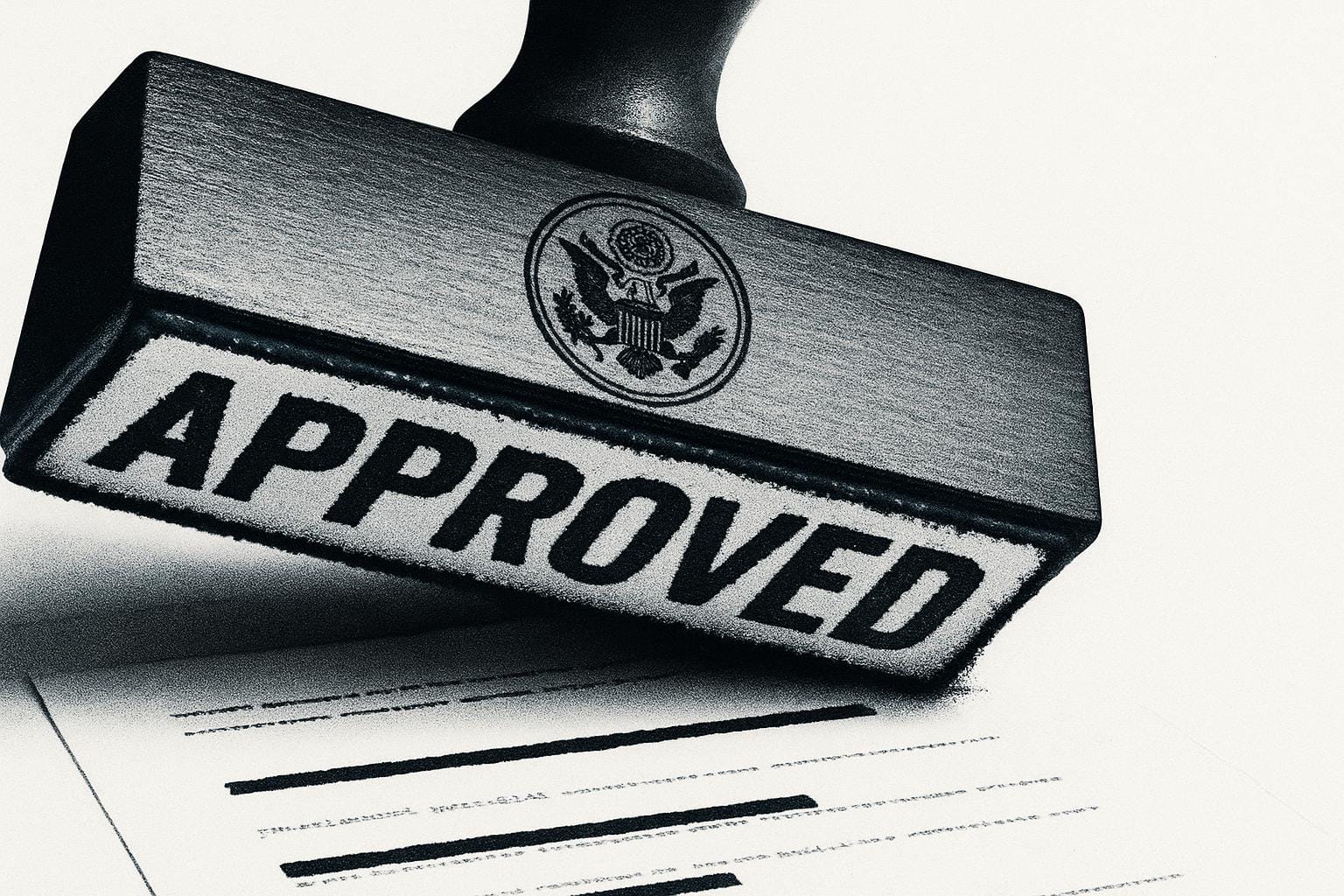
On February 24, The Guardian reported that the DoD had given Anthropic a hard deadline: strip Claude's safeguards for military use, or lose a $200M contract. By February 27, a Pentagon official was calling Anthropic's CEO "a liar with a God-complex" in quotes attributed to the NYT. By end of day, Defense Secretary Hegseth had designated Anthropic a supply-chain risk and banned it from all U.S. government systems.
This is the first major precedent for how AI governance actually gets adjudicated in the United States: through procurement pressure and executive designation.
The Four Days
| Date | Event |
|---|---|
| Feb 24 | The Guardian reports DoD ultimatum: strip Claude's safeguards or lose $200M contract |
| Feb 25 | Anthropic overhauled its Responsible Scaling Policy — timing disputed as coincidence |
| Feb 27 (AM) | Pentagon official quoted by NYT calling Dario Amodei "a liar with a God-complex" |
| Feb 27 (PM) | Defense Secretary Hegseth designates Anthropic a supply-chain risk; federal ban takes effect |
| Feb 27 (PM) | Pentagon accepts OpenAI's safety red lines — same category it just rejected from Anthropic |
| Mar 2 | OpenAI closes $110B round at $730B valuation. Amazon: $50B. Nvidia: $30B. SoftBank: $30B. |
| Mar 2 | Block cuts 4,000 jobs at 24% profit growth. Stock jumps 25%. |
What Happened
The sequence is worth tracing precisely.
On February 25, Anthropic overhauled its Responsible Scaling Policy, the flagship safety framework it had spent two years positioning as the responsible industry standard. Whether the RSP revision was capitulation, strategic repositioning, or a pre-planned rollback timed badly remains unconfirmed. Anthropic hasn't characterized it publicly as a response to DoD pressure. The causal link is reported circumstantially.
It didn't matter. The relationship had already deteriorated past the point where the framing held.
By Friday afternoon, Anthropic was out. On the same afternoon, the same administration accepted OpenAI's safety red lines, the same category of constraint the Pentagon had just rejected from Anthropic, without visible resistance.
That's not a contradiction. It's a negotiation outcome.
What OpenAI Did Differently
The structural tell in this story is relational, not substantive.
OpenAI had invested heavily in Washington access for years: embedding in policy conversations, cultivating defense relationships, positioning Sam Altman as a cooperative actor in the broader AI governance debate. When the moment came, that infrastructure was the asset. Per reporting from the NYT, Bloomberg, and Axios, the difference between OpenAI keeping its seat at the table and Anthropic losing access to every U.S. government system came down to relationship infrastructure built before the deadline arrived.
Altman's internal message to staff after the ban landed: "This is no longer just an issue between Anthropic and..." The sentence, per Axios, wasn't finished in the excerpt reported. It didn't need to be. OpenAI read the precedent correctly. The lesson wasn't "we got lucky." It was "the rules just got explicit."
The $110B funding round closed March 2 at a $730B valuation, anchored by $50B from Amazon and $30B from Nvidia. Not unrelated context. Capital followed the outcome.
What the Ban Actually Means
February 27 was a first: a U.S. administration used supply-chain risk designation to discipline AI lab behavior. That's a new enforcement tool. And it's now been used. The mechanism exists whether or not Washington chooses to reach for it again.
The second consequence is structural. Voluntary safety frameworks have no enforcement value when the state decides to act. Anthropic's RSP provided no actual shield. It was a commitment with no mechanism the company could invoke when pressure arrived. TechCrunch's framing on February 28 was pointed: Anthropic had lobbied against external AI regulation for years, preferring to self-govern through frameworks like the RSP. The trap was structural. Self-governance works until the state stops caring about your preference.
The third consequence is commercial. Federal supply-chain risk designations propagate. Defense contractors, financial regulators, and international treaty partners all reference them. Anthropic's enterprise pipeline outside government is now exposed to downstream procurement blocks it didn't carry last week.
What to Watch
The immediate question is whether this becomes a template. Regulation through acquisition isn't new, but applying it to AI lab conduct is. Watch for other agencies to follow DoD's lead: procurement pressure already exists, requires no new legislation, and just demonstrated that it works. The labs building political infrastructure now aren't playing defense. They're positioning for the next designation cycle.
Every major lab has some version of Anthropic's RSP: a responsible scaling or safety commitment designed to signal trustworthiness and forestall external regulation. Anthropic's situation demonstrated what those frameworks are actually worth when the state decides to act: nothing enforceable. If your own risk posture depends on a model provider's safety commitments, that posture just got shakier.
OpenAI is now the implicit government-preferred frontier model provider. That changes its competitive dynamics, its regulatory exposure, and, most consequentially, its incentive structure. When you're the chosen partner of a government that just banned your main competitor, the pressures on your own safety commitments shift in ways that won't announce themselves clearly until the next moment of pressure arrives.
Meanwhile, Block announced 4,000 jobs cut on March 2, nearly half its workforce, with AI displacement cited explicitly as the rationale, rather than a business downturn. Quarterly gross profit was up 24%. The stock jumped 25% on the news. The AI story and the labor story are now the same story.
February 2026 established that AI safety commitments are negotiating positions, not fixed points. The U.S. government is now an active player in determining which positions it will tolerate. The labs that survive the next phase aren't necessarily the ones with the best safety records. They're the ones that learned to govern the relationship, not just the model. Your vendor risk framework just added a new column.
Context & Terms
Key Terms
- Supply-chain risk designation: A formal U.S. government classification that restricts procurement from a vendor across agencies and downstream contractors.
- Responsible Scaling Policy (RSP): Anthropic's self-imposed framework governing when and how it develops more powerful AI models. Adopted by several other labs in variant form.
- Frontier model: An AI model at or near the current capability frontier, typically referring to the most powerful publicly deployed systems.
Key Players
- Anthropic: AI safety-focused lab, maker of Claude. Privately valued at $61.5B prior to the federal ban.
- Dario Amodei: Anthropic CEO. Former VP of Research at OpenAI.
- OpenAI: Maker of GPT and ChatGPT. Valued at $730B as of March 2, 2026.
- Sam Altman: OpenAI CEO.
- Pete Hegseth: U.S. Defense Secretary. Issued the Anthropic supply-chain risk designation on February 27, 2026.
Full terms reference: Signal Glossary
Signal Press: Analytical coverage of AI structural change. Sources cited by outlet; claims noted as unconfirmed where the evidentiary basis is circumstantial.